


Small Retailer










Before It Becomes Loss
Conventional shrinkage reports only reveal what has already happened after the fact. We identify suspicious behaviour in real time, enabling immediate response, evidence capture, and proactive prevention. This helps operators act early, reduce losses, and strengthen operational control across stores.
See Behaviour Live
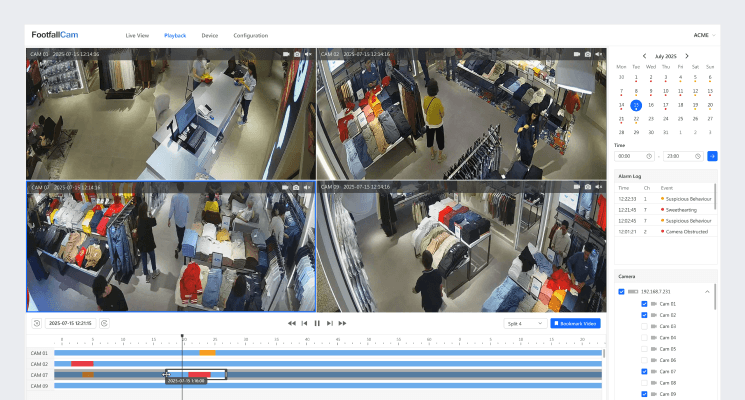
Detect unusual activity as it happens. Monitor key zones such as alcohol, cosmetics, and self-checkout, identifying prolonged dwell, repeated handling, and concealment-like movements using intelligent triggers.
Act Instantly
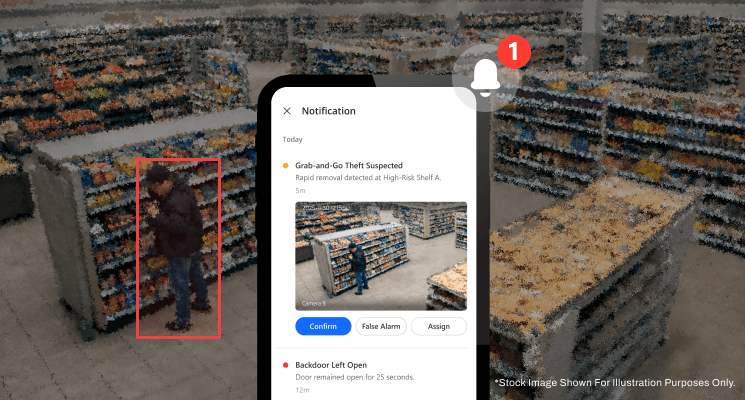
Receive clear, actionable alerts. Notifications indicate where attention is needed, enabling staff to respond immediately without constant monitoring or complex interpretation, ensuring faster and more accurate operational decisions.
Verify with Evidence
Every alert includes a short clip and snapshot. Store teams can quickly verify situations, reducing ambiguity and enabling confident action without reviewing hours of footage or manual investigation.
Deploy Where It Matters
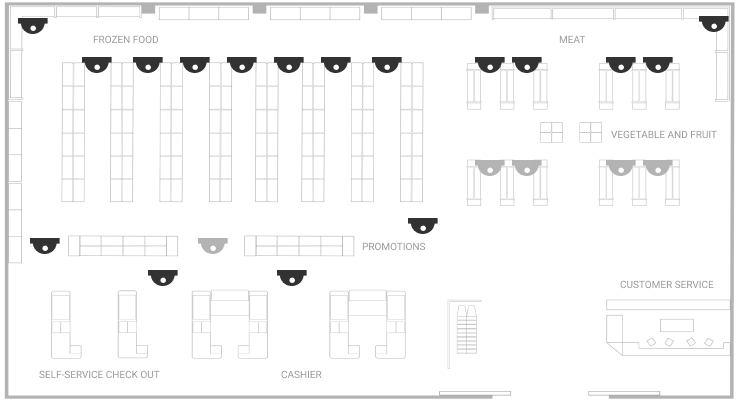
Focus on high-value and high-risk areas. Deploy in selected zones instead of full-store coverage, making the solution practical, scalable, and easy to standardise across locations for consistent operational efficiency.
Review and Improve
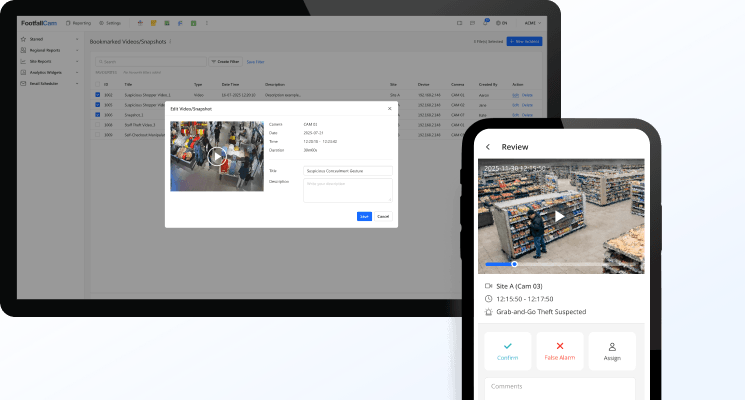
Review flagged events by time, zone, or behaviour. Identify recurring patterns and refine store response, improving effectiveness and operational consistency without increasing workload or management burden.
Case Study
High-value loss reduced
Self-checkout misuse controlled
Blind spots eliminated
High-value loss reduced
Case Study 1
High-value loss reduced
Store size
9,200 sq ft supermarket, urban location, high-value alcohol and cosmetics sections
Loss issue
Shrinkage concentrated in alcohol aisle during evening hours. Incidents were inconsistent, with no clear visibility on when or how losses occurred.
Deployment scope
Queue Control Suite deployed across all checkout points. Real-time monitoring, 15-minute prediction, and standardised action thresholds enabled.
Behaviour detection deployed in alcohol and cosmetics zones. Real-time alerts and clip-based evidence enabled immediate staff response and structured review of suspicious events.
Measured improvement
Suspicious behaviour incidents reduced by 35% within 6 weeks. Staff presence increased during peak periods, and repeat loss patterns in alcohol section were significantly reduced.
Self-checkout misuse controlled
Case Study 2
Self-checkout misuse controlled
Store size
7,800 sq ft supermarket, suburban location, 4 staffed lanes + 8 self-checkout kiosks
Loss issue
Frequent misuse at self-checkout, including non-scanned items and irregular scanning behaviour. Staff were unable to monitor all kiosks effectively during busy periods.
Deployment scope
Monitoring deployed across self-checkout zone. Alerts triggered on prolonged dwell, repeated item handling, and irregular interaction patterns, supported by clip-based verification.
Measured improvement
Unresolved self-checkout discrepancies reduced by 28%. Staff intervention improved, with faster response to flagged behaviour and more consistent supervision during peak hours.
Blind spots eliminated
Case Study 3
Blind spots eliminated
Store size
11,500 sq ft supermarket, neighbourhood store with partial CCTV coverage
Loss issue
Shrinkage reported across multiple categories, but CCTV coverage was incomplete. Investigation relied on manual review with limited success in identifying causes.
Deployment scope
Targeted deployment in key aisles with historically high loss. Behaviour detection and event capture enabled structured review without requiring full-store coverage.
Measured improvement
Investigation time reduced by over 60%. Store teams identified recurring patterns in specific aisles, leading to improved staff allocation and reduced repeat incidents.
FAQs
Learn More