


Small Retailer









Deployment in Practice
See how typical stores are deployed using a mix of wide-angle devices and existing CCTV. Each setup is repeatable, cost-efficient, and requires minimal change to existing layouts.
QSR
Cafés
Food Courts
QSR
Fast Food Restaurants
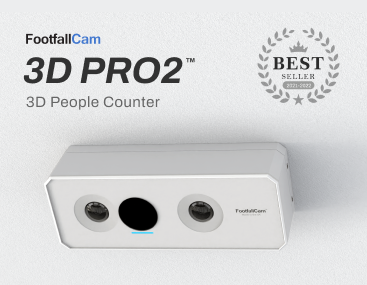
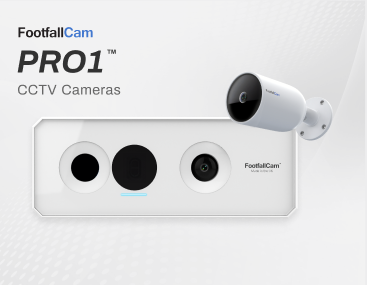
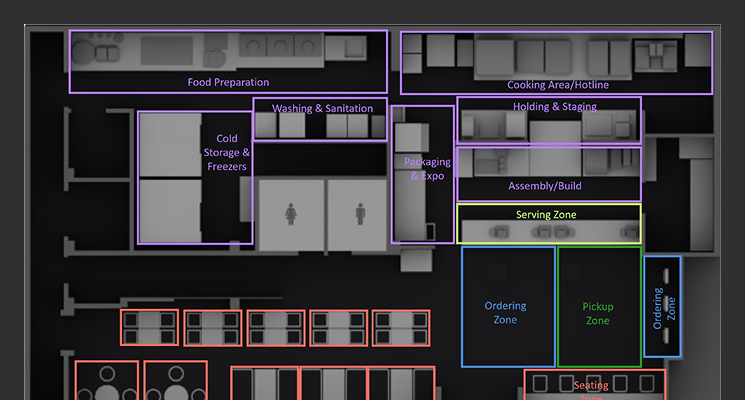
High-throughput layout covering ordering, queue, and collection zones. Combines wide-angle Pro1 devices and CCTVs to track customer flow, queue length, and service speed without disrupting existing counter or kitchen operations.
Cafés
Cafés
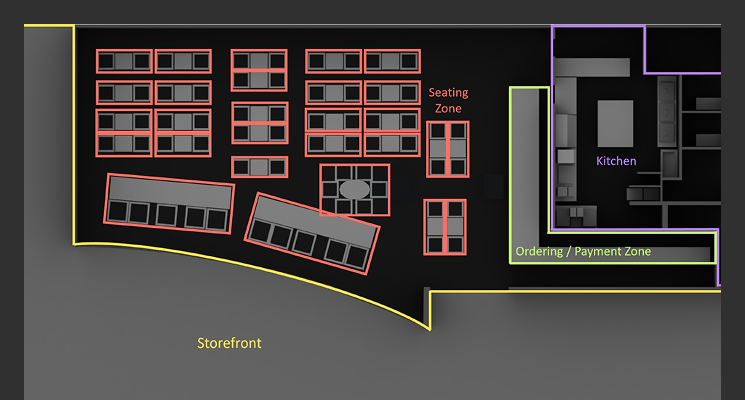
Designed for smaller, flexible spaces with seating and takeaway mix. Monitors entrance traffic, dwell time, and seating utilisation using minimal devices, preserving the ambience while capturing key customer behaviour insights.
Food Courts
Food Courts
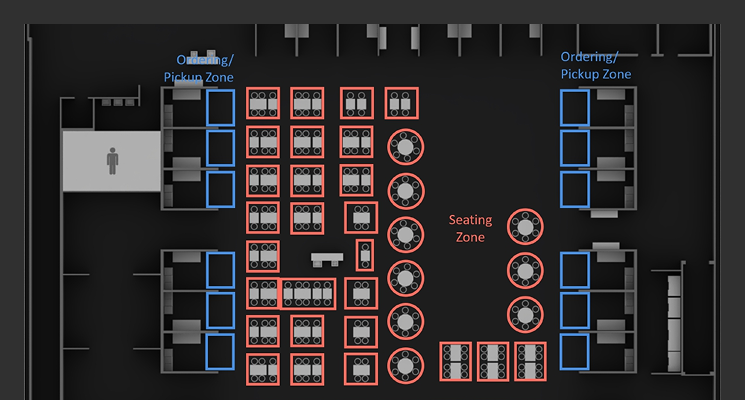
Open, shared environments with multiple vendors and seating zones. Uses wide-angle Pro1 devices and existing CCTVs to measure footfall distribution, table occupancy, and cross-traffic between stalls without requiring structural changes.
Fits Any Stores
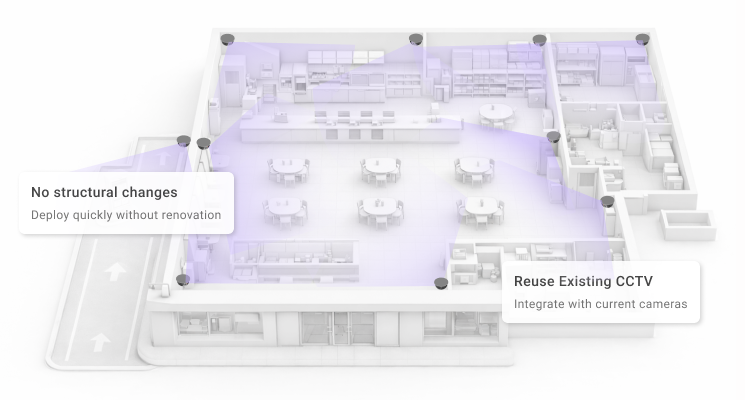
No Redesign Required
The system works with your existing store layout. Wide-angle coverage reduces the number of devices needed, while existing CCTV can be reused for additional zones such as drive-thru, entrances, or external areas. No structural changes or redesign are required before deployment.
Installs in Hours
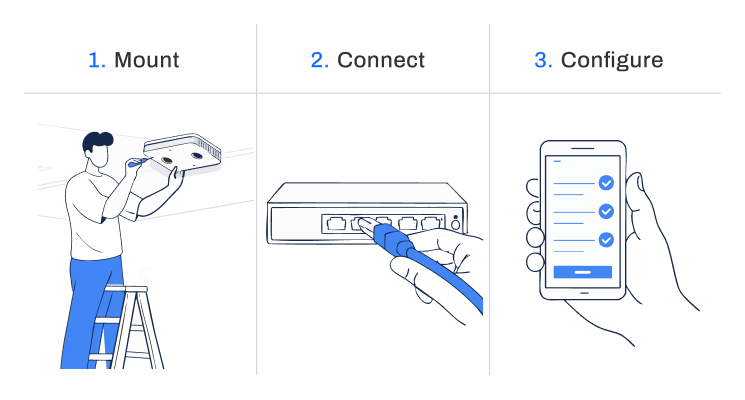
Each device is installed using standard PoE connection and simple mounting. Most stores can be deployed within a few hours by local technicians or existing vendors. No specialist skills or extended downtime are required, making rollout predictable across multiple locations.
All Stores, One System
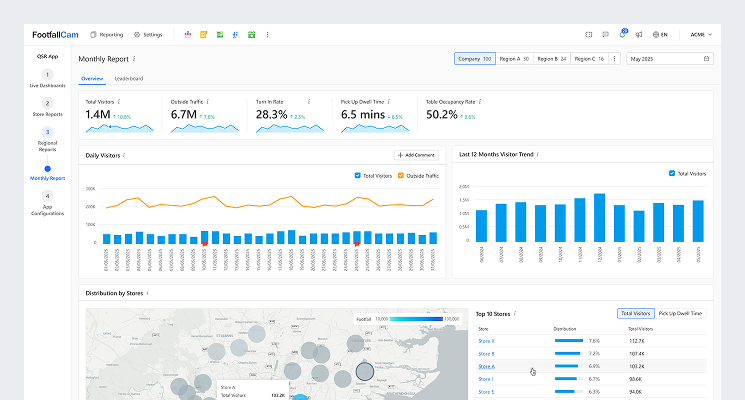
All locations are connected to a single platform for monitoring, reporting, and configuration. Regional teams can compare performance across stores, while IT teams manage devices remotely. This ensures consistent deployment standards and operational visibility across the entire network.
Minimal Maintenance Required
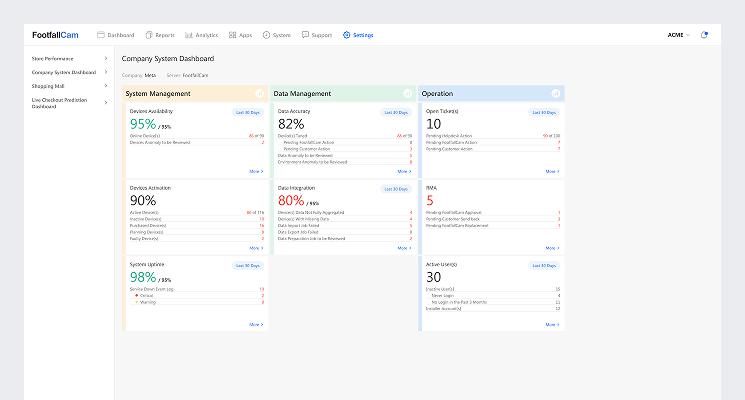
Devices are designed for continuous operation with remote monitoring and health checks. Firmware updates and diagnostics can be handled centrally without site visits. This reduces ongoing maintenance effort and ensures consistent performance without adding operational overhead to store
Fewer Devices, Lower Cost
Wide-area coverage reduces the number of devices required per store. Combined with reuse of existing CCTV infrastructure, this significantly lowers installation cost, cabling requirements, and long-term maintenance. The result is a lower total cost per store, especially at scale.
Rollout Model
Deployment follows a phased rollout model, allowing validation before scaling. This reduces risk and ensures consistency across locations.
Phase 1
Pilot
Start with a small number of pilot stores to test deployment setup and performance in real conditions.
Phase 2
Validate
Validate performance, accuracy, and setup consistency before proceeding to rollout across all locations.
Phase 3
Scale
Expand deployment in controlled rollout waves, ensuring consistency while adapting to different store formats.
Phase 4
Standardise
Standardise deployment, processes, and configurations across locations to ensure consistency and efficiency.
What Teams Typically Ask
Proof & Confidence
This deployment model has been used across multi-store retail and food service environments, supporting both new installations and retrofit projects using existing infrastructure.