










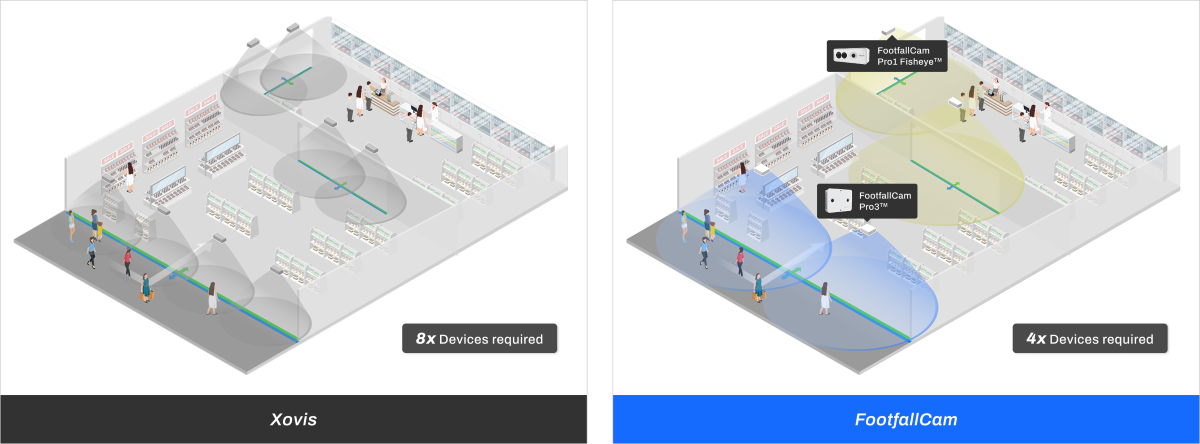
1. Lower Hardware Cost Per Square Foot
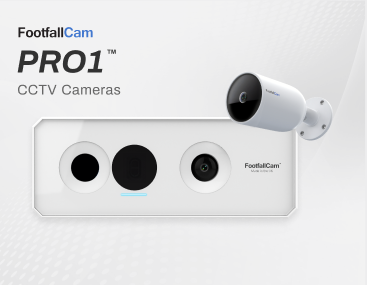
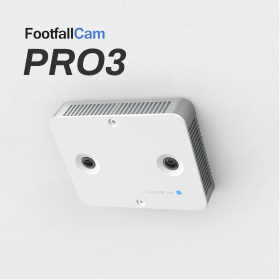
Traditional deployments require dense sensor installation, driving up hardware count and cost per square foot significantly. FootfallCam uses wider field-of-view AI coverage and supports existing cameras, reducing the number of required devices. This results in substantially lower capital expenditure while enabling broader coverage across larger areas without proportional cost increases.
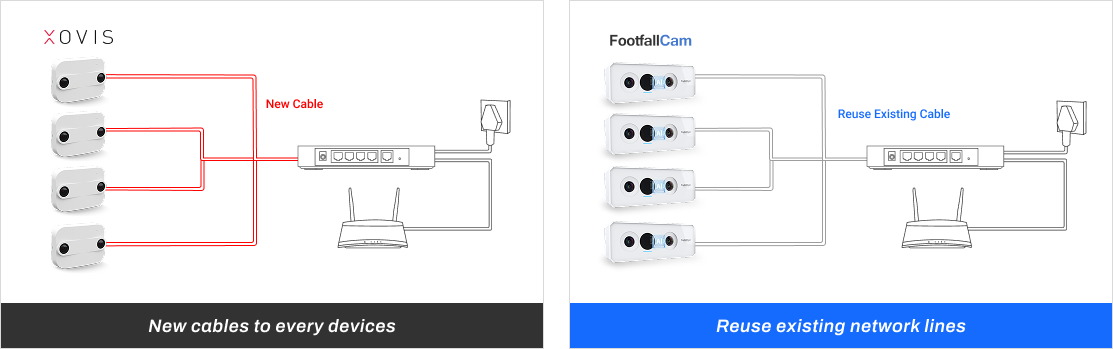
2. Lower Infrastructure and Cabling Requirements
Conventional systems require dedicated cabling, power provisioning, and installation per sensor, increasing deployment complexity and time. FootfallCam leverages existing Ethernet and CCTV infrastructure, minimising new cabling requirements. This reduces installation effort, accelerates rollout timelines, and avoids disruption to existing operations while maintaining scalability across multiple terminal areas.
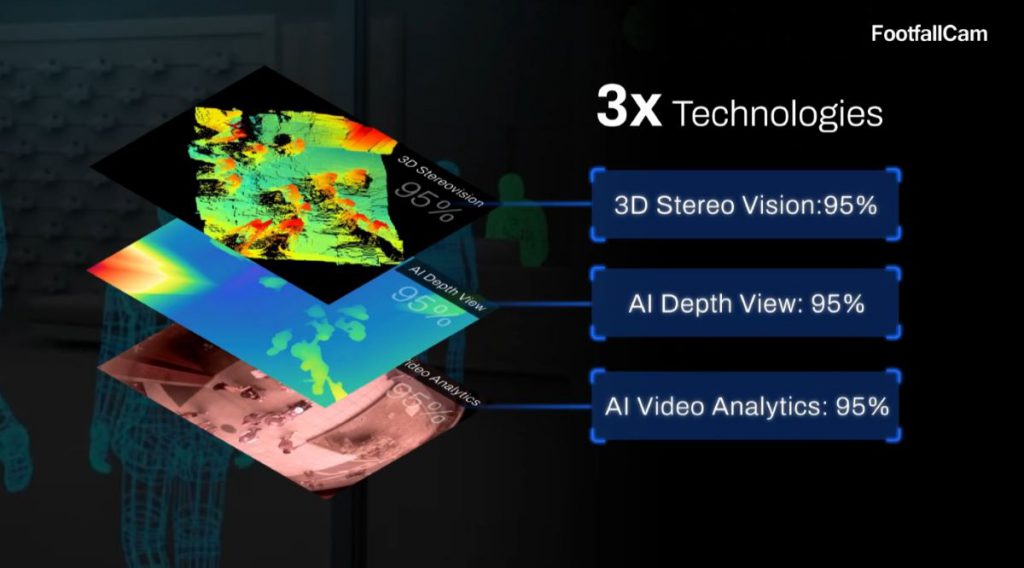
3. Latest Generation AI Counting Accuracy
Stereo-based systems rely on fixed geometry and struggle in complex real-world conditions such as trolley movement, dense queues, and passenger interactions at counters. FootfallCam applies AI-based detection with adaptive models that interpret behaviour and context, delivering more consistent performance across varied environments where traditional approaches typically degrade.
99.9% Accuracy and How Does it Work – FootfallCam
4. Full Terminal Coverage Capability
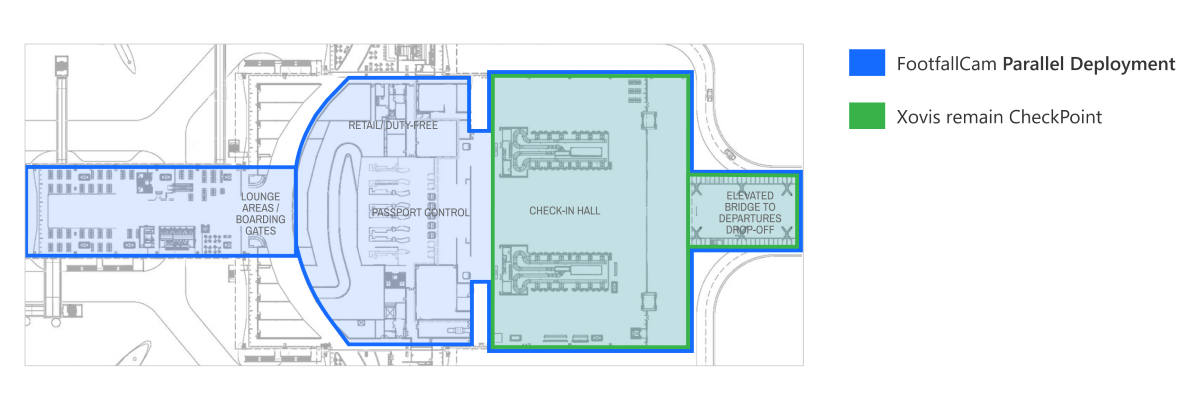
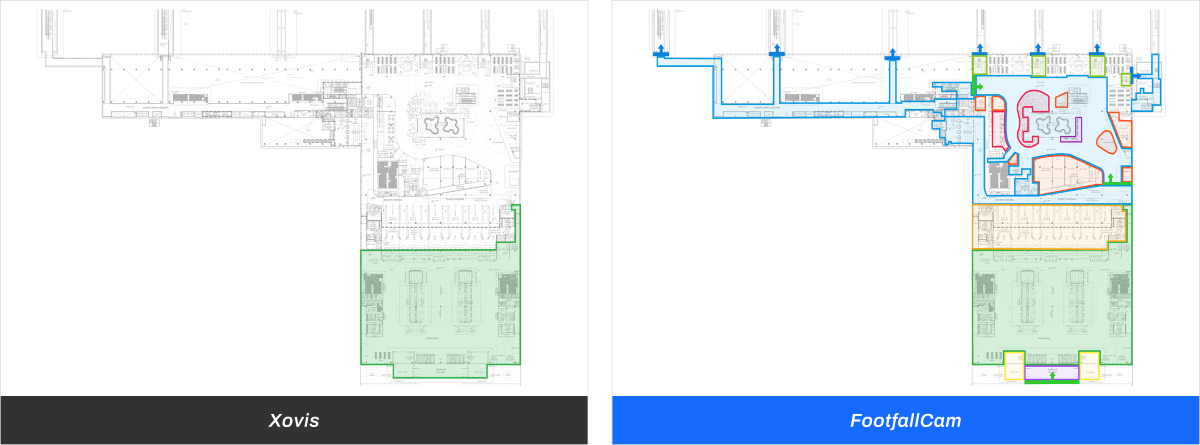
Existing deployments are typically limited to high-priority checkpoints, leaving significant areas unmonitored due to cost constraints. FootfallCam enables scalable expansion into walkways, retail zones, and boarding areas. This allows airports to achieve continuous visibility across the full passenger journey, rather than relying on fragmented data from isolated operational points.
5. Open Architecture and Multi-Vendor Integration
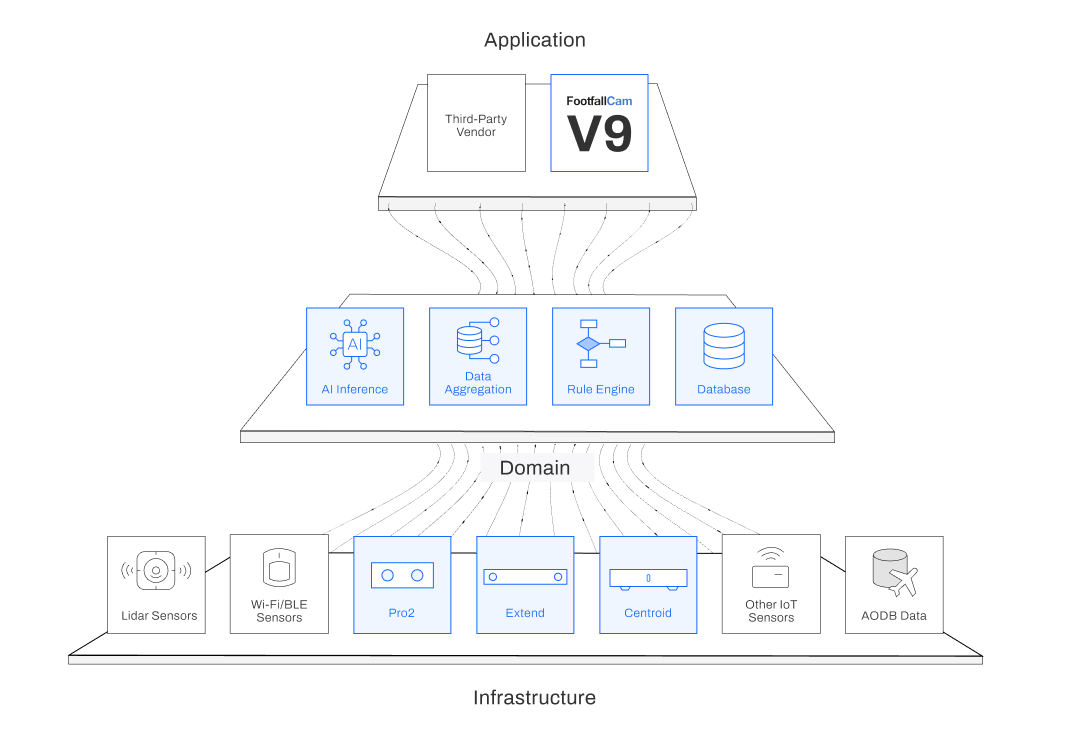
Closed systems restrict integration, limiting flexibility and long-term adaptability. FootfallCam provides open APIs, structured data outputs, and compatibility with multiple device types and external systems. This allows airports to integrate with AODB, BI platforms, and operational dashboards, while maintaining control over their architecture and avoiding dependency on a single vendor ecosystem.
6. Immediate Expansion Without Replacing Existing System
FootfallCam can be deployed alongside existing systems without requiring removal or disruption. New coverage can be introduced in areas currently not instrumented, enabling immediate operational benefits. This parallel deployment approach allows airports to validate performance, expand gradually, and enhance overall system capability without risking existing operations or prior investments.